What a weekend.
On September 27, my team finished UPEI's Animal Welfare Hackathon with the Most Animal Welfare Impact award for Rural Reach, our proposal for a rural veterinary care co-op.
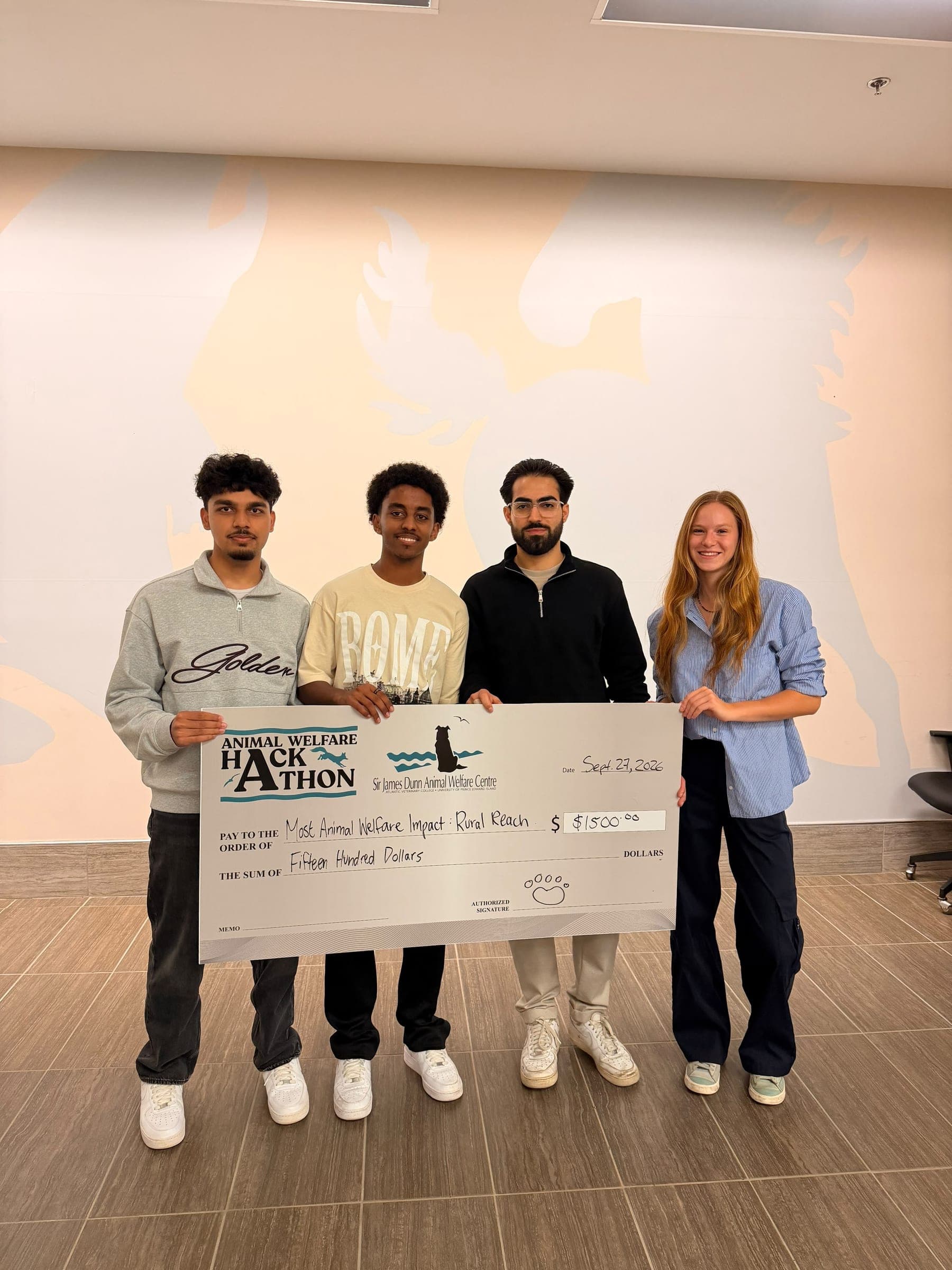
The Rural Reach team with the Most Animal Welfare Impact award.
Starting with access
We began the weekend with one challenge: access to veterinary care in rural communities.
Our first idea focused on portable veterinary equipment. We wondered whether making tools easier to access could help veterinarians serve more rural clients. But as we kept working, the equipment started to look like only one part of the problem.
Farmers and rural pet owners still need a way to find care. Veterinarians have to spend time travelling between clients. Someone has to schedule those visits, plan practical routes, and make sure shared equipment gets cleaned, inspected, and maintained. Solving one piece without the others would leave most of the challenge untouched.
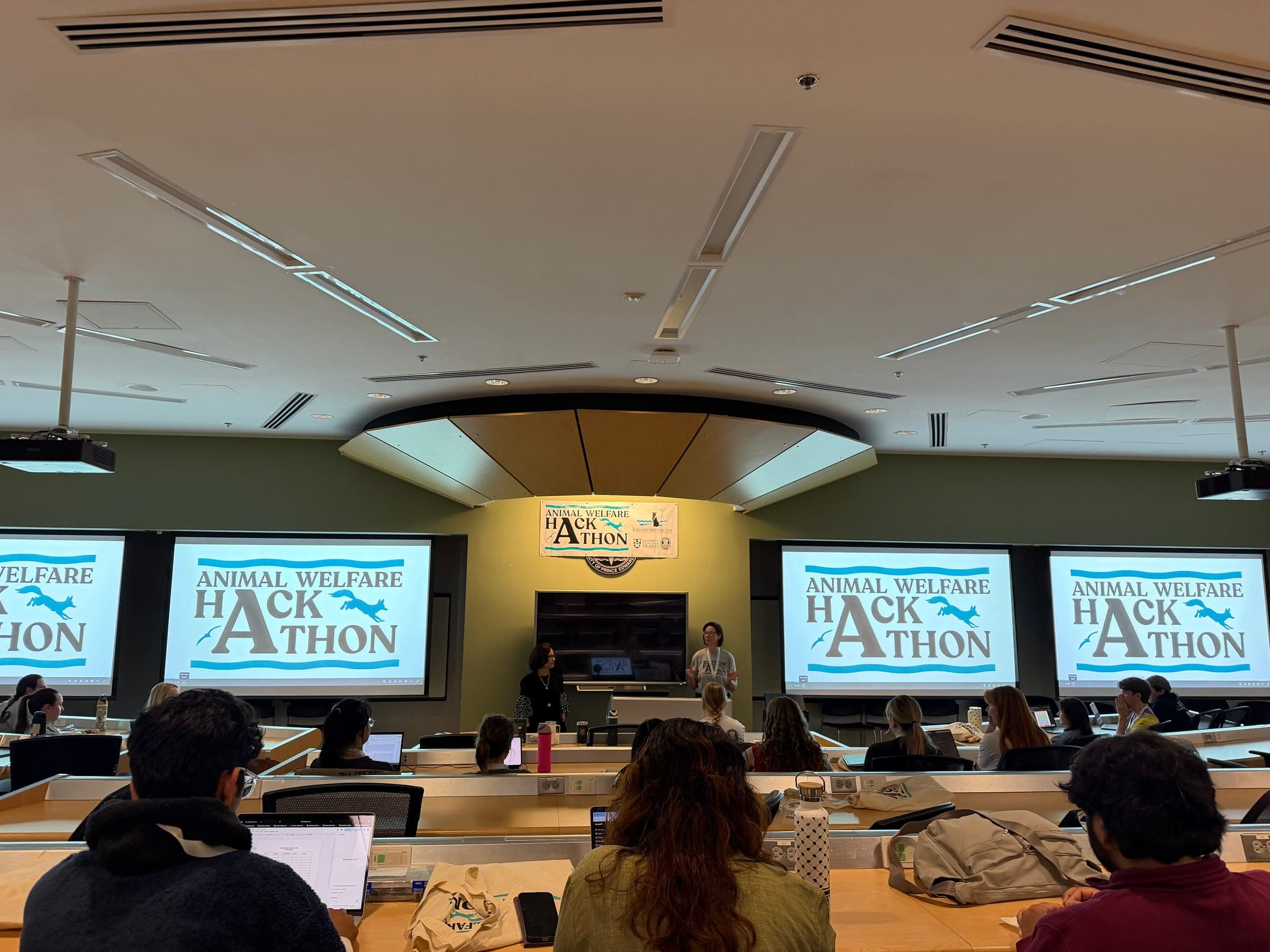
From shared equipment to Rural Reach
That wider view became Rural Reach. We proposed a cooperative hub that would connect rural animal owners with participating veterinarians, coordinate bookings, and group nearby visits when schedules allow. A shared equipment depot could give licensed veterinarians access to portable tools such as ultrasound, X-ray, and lab equipment for on-farm visits.
The co-op would not provide veterinary care itself. Licensed veterinarians would continue making clinical decisions and caring for clients. Rural Reach would support the work around that care by helping with connections, routes, and shared equipment.
We used Perth-Andover, New Brunswick, as the setting for a possible pilot. It gave us a real place to test our assumptions and think through questions we could not ignore: Who maintains the equipment? How do veterinarians join? How would we measure whether the model actually improves access? What would have to be true before a pilot could launch?
We did not leave the weekend pretending every question had been answered. We left with a clearer proposal and a much better understanding of what still needs to be tested.
Learning outside computer science
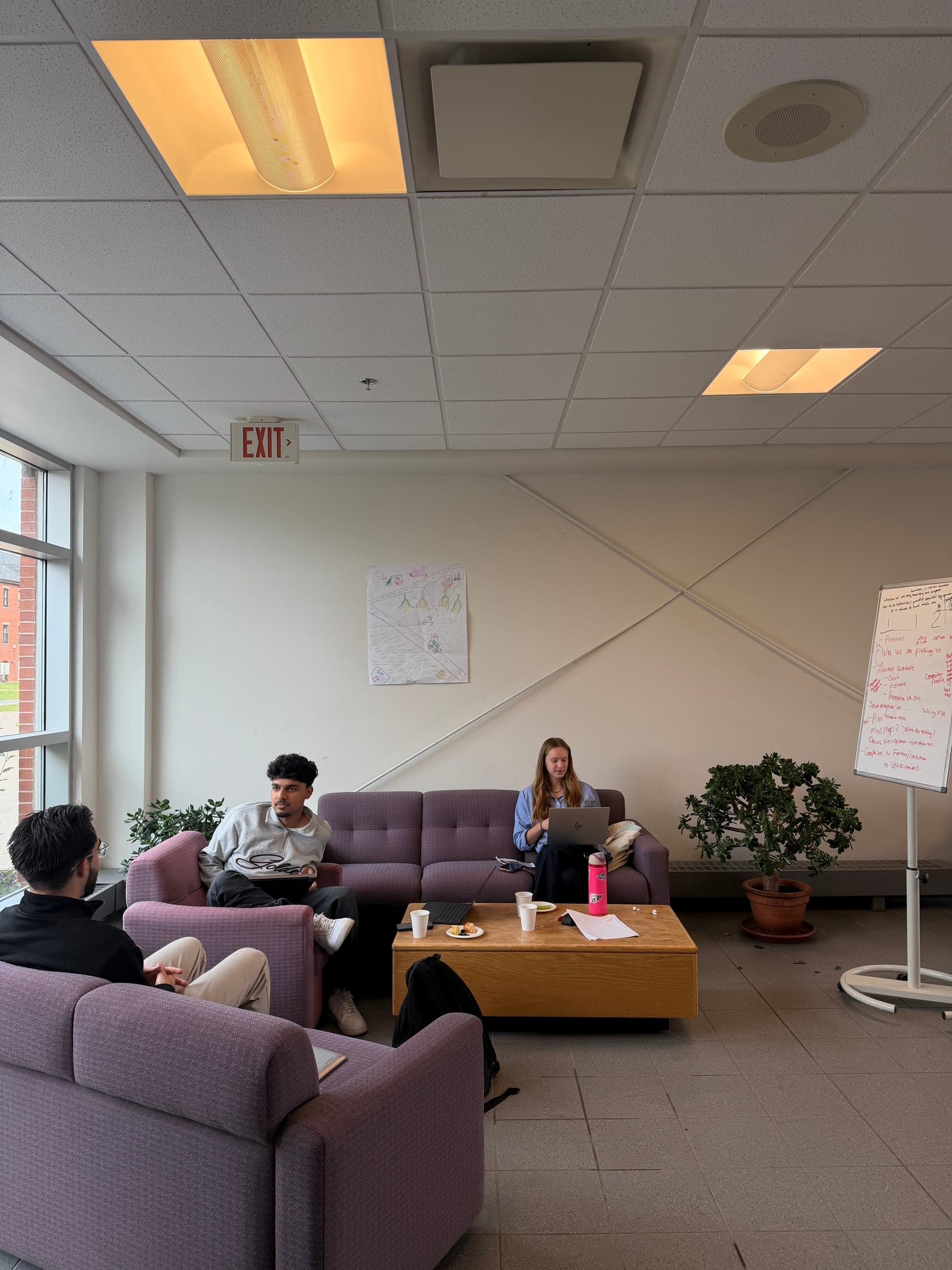
One of my favourite parts of the hackathon was working with people from different backgrounds. As a computer science student, I could bring my own way of breaking down a problem, researching options, and turning a rough idea into something we could explain. At the same time, I knew very little about rural veterinary care when the weekend began.
Listening to veterinary students, mentors, and the people around us changed the project. Each conversation pushed us to question an assumption or notice something we had missed. The idea improved because nobody on the team tried to solve the whole problem alone.
Winning the award
Hearing Rural Reach announced for the Most Animal Welfare Impact award was an amazing way to finish the weekend. I am proud of the proposal, but I am even more grateful for the process that got us there. The biggest lesson was seeing how much an idea can change when you keep listening, challenging your first answer, and building with people who understand the problem differently.
Huge thanks to my teammates Fahad Rahman Khan, Alessandro Pacetti, and Zoe, along with our mentors, the organizers, and the judges. Thank you as well to the Atlantic Veterinary College and the University of Prince Edward Island for making the experience possible.
What comes next
We are not stopping here. Our next step is bringing Rural Reach to the PEI IT Alliance's Spark Tank 5.0 on October 5 and seeing how far we can take the idea.
I am excited to keep learning, keep testing the proposal, and find out what comes next.